The Silent Enemy of Mass Concrete: Managing Early Thermal Cracking
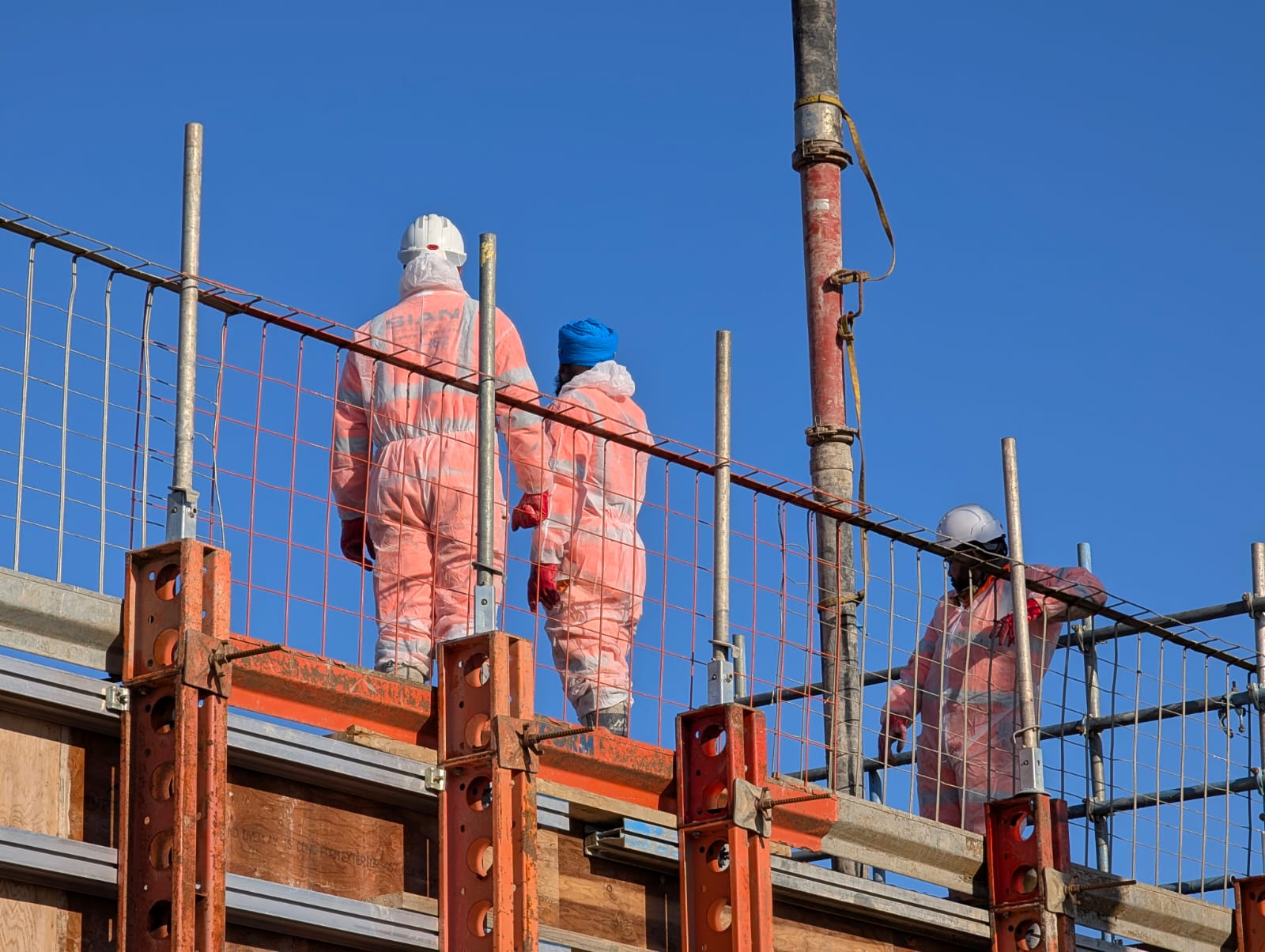
If you have ever stood over a 500 cubic-meter concrete pour for a bridge abutment or a thick tunnel base slab, you know the tension. You’ve checked the reinforcement, signed off the temporary works, and verified the slump. The concrete goes in, the vibratory pokers do their job, and the surface is finished.
But for the Site Engineer, the most critical phase is just beginning. As the concrete cures, a silent, invisible battle of thermodynamics and structural mechanics is raging inside the formwork.
I am talking about Early Age Thermal Cracking. It is one of the most misunderstood phenomena on site, often waved away as "shrinkage" by inexperienced teams. But in heavy civil infrastructure, failing to respect the exothermic reality of mass concrete doesn't just result in cosmetic blemishes—it leads to critical structural non-conformances, compromised durability, and massive commercial rework.
Here is a deep dive into the mechanics of thermal cracking, the mathematics of restraint, and how we engineer solutions before the concrete ever leaves the batching plant.
The Physics of the Pour: The Exothermic Core
Concrete does not "dry"; it cures through hydration—a highly exothermic chemical reaction between cementitious materials and water. In standard structural slabs (under 300mm), this heat dissipates rapidly into the atmosphere.
However, in mass concrete (typically defined as any element thicker than 500mm, like viaduct piers or thick pile caps), the core acts as an insulated oven. The core temperature can rapidly spike to 70°C or higher within the first 48 hours.
Meanwhile, the outer faces of the concrete are exposed to ambient site conditions—perhaps 10°C on a cold morning. This creates a severe thermal gradient between the hot, expanding core and the cool, contracting surface.
The Mechanism of Failure: Restraint and Tensile Strain
Concrete is inherently weak in tension. Early thermal cracking occurs when the tensile strain induced by cooling and contraction exceeds the tensile strain capacity of the immature concrete.
But temperature drop alone doesn’t cause cracking; **restraint** does. If a block of concrete is completely free to expand and contract, it will not crack, regardless of the temperature drop. Cracking occurs because the concrete is restrained from moving. There are two primary types of restraint:
- Internal Restraint: The hot core expands, but the cooler surface wants to contract. The core restrains the surface from shrinking, putting the outer faces into severe tension, leading to surface cracking.
- External Restraint: The entire concrete element cools and attempts to contract, but it is physically held in place by what it was cast against (e.g., a massive blinding layer, adjacent existing concrete, or deep rock foundations). This leads to deep, full-depth cracking.
The Mathematics: CIRIA C766
In the UK, we govern this through BS EN 1992-3 and the CIRIA C766 guide (Control of Cracking Caused by Restrained Deformation in Concrete). To assess the risk, we calculate the restrained strain:
Restrained Strain = Restraint Factor × Thermal Expansion Coefficient × Temperature Drop
Breaking down the variables:
Restraint Factor: How restricted the element is from moving (usually between 0 and 1).
Thermal Expansion Coefficient: The physical properties of your specific concrete mix and aggregate.
Temperature Drop: The difference between the hot core peak and the ambient air temperature.
If the calculated restrained strain is greater than the tensile strain capacity of the concrete at that specific early age, the element will crack. To control the crack widths to acceptable structural limits (usually 0.2mm to 0.3mm for heavily exposed infrastructure), we must provide sufficient distribution reinforcement.
Mitigating the Risk on Site
As engineers, we cannot change the laws of thermodynamics, but we can manipulate the variables. Successfully executing a mass pour requires a multi-disciplinary approach:
1. Mix Design (Lowering the Heat)
The most effective way to lower the peak temperature is to alter the chemistry. By replacing a significant percentage of Portland Cement (CEM I) with secondary cementitious materials like GGBS (Ground Granulated Blast-furnace Slag) or Fly Ash, we drastically slow down the hydration process. A 50-70% GGBS mix will bleed heat slowly over weeks rather than violently over 48 hours, significantly flattening the temperature curve.
2. Thermal Blankets (Counter-Intuitive Engineering)
When a site engineer sees a concrete core hitting 65°C, their instinct is often to strip the formwork to "let it cool down." This is catastrophic. Stripping formwork prematurely exposes the hot concrete to cold air, instantly maximizing the thermal gradient and fracturing the surface. Instead, we use insulated formwork or thermal blankets to intentionally keep the surface warm, ensuring the temperature difference between the core and the face never exceeds 20°C.
3. Active Cooling Systems
For ultra-massive structures, passive mitigation isn't enough. We install networks of sacrificial HDPE cooling pipes tied to the rebar cage before the pour. By pumping chilled water through the core during the hydration peak, we actively extract the heat, safely bringing the core temperature down to match the surface.
4. Thermocouple Monitoring
We don't guess. We install sacrificial thermocouples at the core, the face, and the ambient environment, wiring them back to data loggers. This creates a real-time digital twin of the thermal curing process, allowing us to dictate exactly when it is mathematically safe to strike the temporary works.
Conclusion
Executing heavy civil infrastructure is not about brute force; it is about predicting and managing micro-level physics on a macro scale. When you look at a flawless, 10-meter-high viaduct pier, you aren't just looking at good setting out. You are looking at a masterclass in chemical management, thermal thermodynamics, and rigorous site discipline.
Mosbah