The HS2 Autopsy: A Civil Engineer’s Perspective on the £60 Billion Wake-Up Call
When the High Speed 2 (HS2) project was fully conceptualised over a decade ago, it was pitched as the ultimate catalyst for British connectivity. The original 2012 budget for the entire network—linking London to Birmingham, Manchester, and Leeds—was set at £32.7 billion.
Fast forward to today, and the reality is bruising. Following the cancellation of the Eastern leg, and the subsequent scrapping of Phase 2 entirely in late 2023, we are left with a vastly reduced London-to-Birmingham "shuttle." Yet, the estimated cost for this single phase alone has spiralled to somewhere between £50 billion and £67 billion.
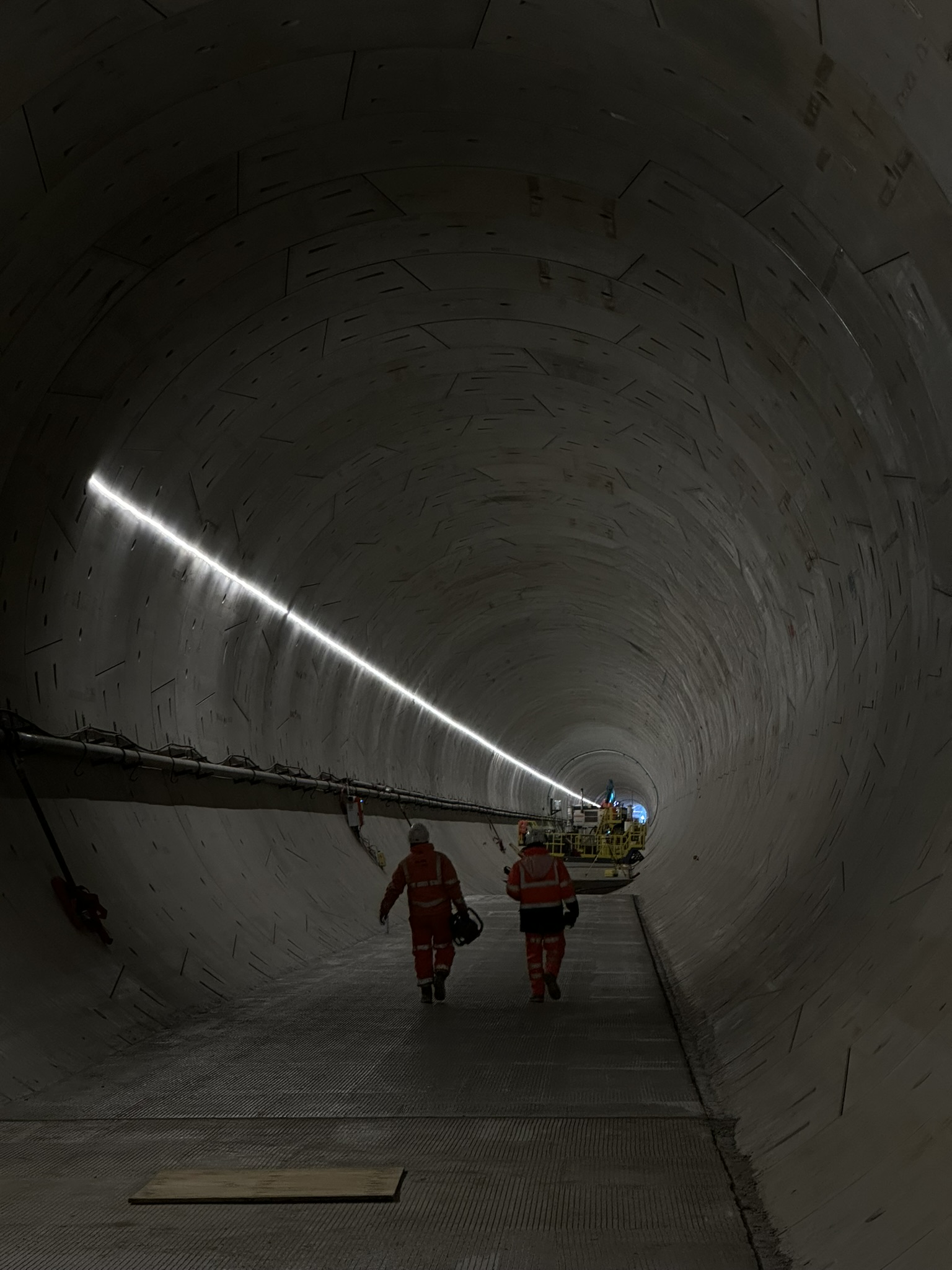
As a civil engineer who has spent years in the trenches of HS2 - managing track slabs in the Long Itchington Wood Tunnel, overseeing viaducts, and pushing for millimeter-perfect tolerances on complex concrete structures - watching the strategic and financial collapse of this megaproject is deeply frustrating. We poured our sweat into delivering world-class, heavily scrutinised engineering, only to watch the overarching programme buckle under the weight of its own inefficiency.
It is easy to point the finger at politicians, inflation, or environmental protests. But if we are being brutally honest with ourselves as an industry, the root of the problem lies much closer to home. The sheer scale of capital waste on modern megaprojects is a direct symptom of how poorly the construction sector manages the gap between design theory and on-site reality.
In major infrastructure, we constantly preach the mantra of getting it "Right First Time." But physical execution is downstream of data. You can have the most advanced Leica 3D machine control systems in the world, achieving <5mm tolerances on a track slab, but if the design data you are feeding it is flawed, you are simply building the wrong thing, with perfect accuracy.
I have seen firsthand how dense, unbuildable RC reinforcement detailing makes it out of the design office and onto the site before anyone flags a spatial clash. I have seen critical highway alignments handed over with incorrect crossfall models. When these discrepancies inevitably halt production, the financial burn rate is staggering.
And how does the industry typically handle these crises? With a flurry of fragmented emails, un-tracked WhatsApp messages, and delayed RFIs. A project with the scale and complexity of HS2 simply cannot survive on ad-hoc communication and archaic paper-chasing mentalities.
When you break down the numbers, the early estimates for HS2 Phase 1 sat at roughly £126 million per mile. As costs have ballooned, we have to ask: what are we actually paying for?
We are paying for rework. We are paying for the time it takes to resolve an engineering query because the supply chain operates in information silos. We are paying for delays because site teams and design teams lack a singular, unified source of truth. Under complex NEC4 contracts, this lack of an auditable, structured workflow doesn't just cause delays—it creates catastrophic commercial disputes.
If the UK is ever going to successfully deliver a megaproject again, we have to fundamentally shift how we manage construction data. The "Golden Thread" of information is no longer just a buzzword; it is a critical survival mechanism for the sector.
To stop the next major infrastructure project from becoming a financial black hole, three non-negotiable steps must be taken:
- Proactive, Daily BIM Integration: 3D coordination and Digital Twins cannot just be a box-ticking exercise during the design phase. They must be used daily by site management to pre-emptively identify and resolve spatial conflicts before the temporary formwork is ever erected.
- Digitising the Escalation Matrix: We must ruthlessly eliminate informal communication channels for site changes. Every single RFI, Design Modification Request (DMR), and Early Warning Notice must be captured in a structured, automated workflow that aligns with ISO 9001.
- Commercial & Quality Synergy: Quality Assurance and commercial liability (NEC4) are two sides of the same coin. By establishing a robust digital record, we protect the contractor's liability while ensuring that the final handover is backed by bulletproof data integrity.
Conclusion
British civil engineering possesses some of the greatest technical minds and advanced methodologies in the world. We know how to build complex sub-soil structures, and we know how to launch viaducts over live motorways. What we lack is the operational and digital discipline to connect it all seamlessly.
HS2 should serve as a massive, £60 billion wake-up call. The future of civil infrastructure isn't just in pouring concrete faster or digging deeper tunnels; it is in the robust digital compliance that holds it all together. Until we fix the process, we will continue to pay the price.
Mosbah