The Slump Test Standoff: 45 Minutes to Midnight
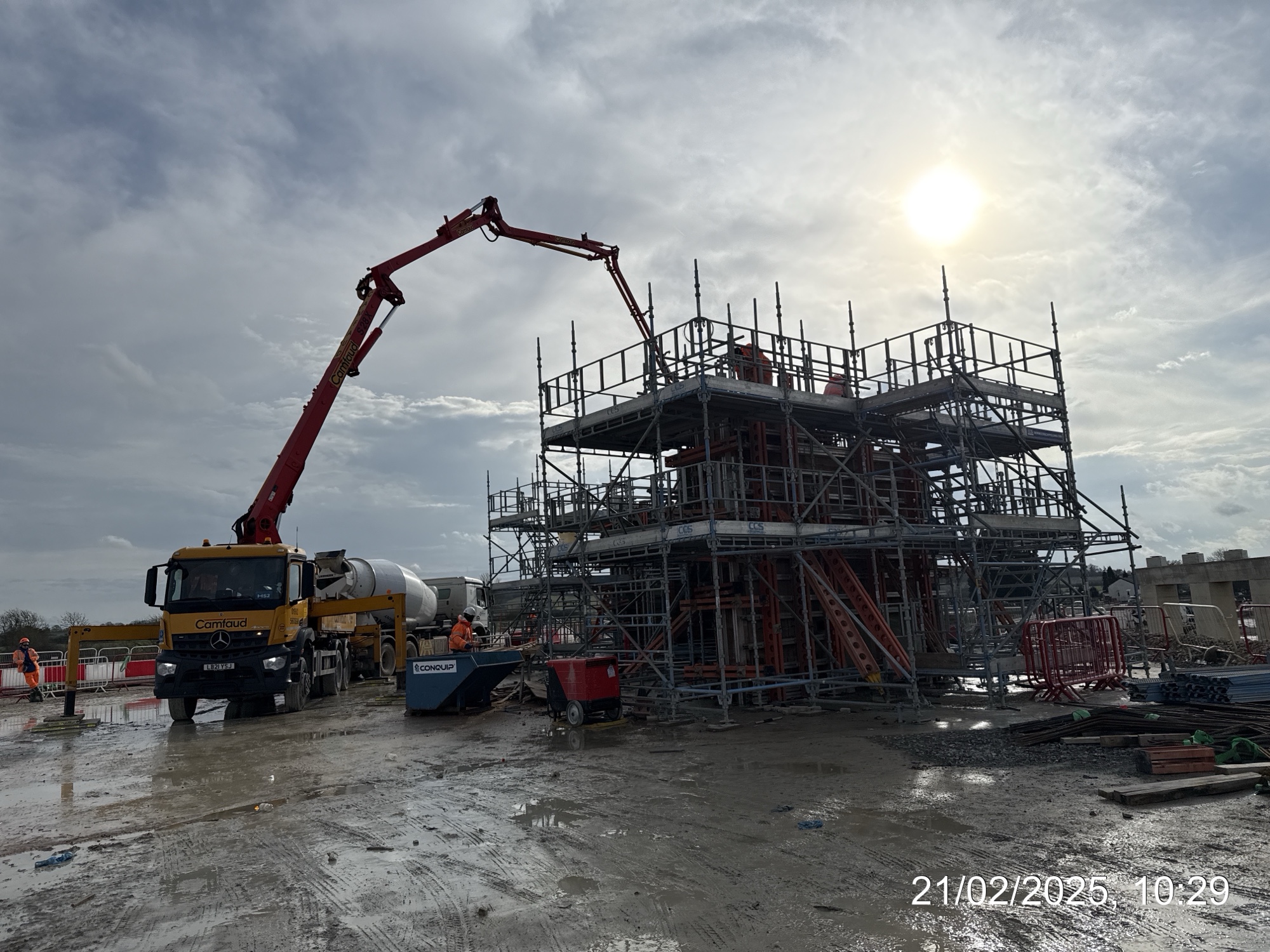
There is a highly specific type of silence that falls over a construction site at 11:15 PM. It is not a peaceful silence. It is the tense, heavily caffeinated silence of twenty grown men staring at the site gates, waiting for the arrival of the most volatile substance in civil engineering: Ready-Mix Concrete.
When the structural design team in their warm office specifies a C40/50 concrete mix with a strict 50mm slump, it looks perfectly reasonable on paper. It represents a highly durable, structurally flawless material.
On site, in the freezing drizzle, a 50mm slump is an absolute nightmare.
This brings us to the greatest test of nerve a graduate Site Engineer will ever face. It is not calculating bending moments. It is the Slump Test Standoff.
The Science of the Sludge
Before we get to the standoff, we must understand the educational reality of the Slump Test (BS EN 12350-2).
Concrete is essentially a chemical time bomb. From the moment the water hits the cement at the batching plant, an irreversible, exothermic reaction called hydration begins. You have approximately two hours to get it out of the lorry, into the formwork, and vibrated before it begins to set solid.
The "Workability" of the concrete - how easily it flows through the dense cages of reinforcing steel without leaving massive voids - is critical. We measure this workability using the Abrams Cone.
You take a hollow steel cone, fill it with wet concrete in three distinct layers, and violently stab each layer 25 times with a steel tamping rod. You then carefully lift the cone straight up. The concrete unsupported by the steel will "slump" downwards. You measure the difference between the height of the steel cone and the height of the collapsed concrete puddle.
If the specification says 50mm, you want it to drop exactly 50mm.
Here is the fundamental law of concrete physics that governs the entire industry: The Water/Cement Ratio. If you want the concrete to flow better (a higher slump), the easiest thing in the world is to just add water. But if you add unapproved water, you space the cement particles further apart. When it cures, it is full of microscopic capillary voids. You have just destroyed the compressive strength of the concrete. You have turned a £50 million viaduct pier into a giant, grey sponge.
To make concrete flow without adding water, you must use highly engineered chemical admixtures called Superplasticisers. These are expensive. Ready-mix companies do not like giving away expensive chemicals for free.
The Arrival of Baz
At 11:20 PM, the blinding headlights of an 8-wheeler concrete mixer pierce the gloom.
The driver climbs out. We will call him Baz. Baz has been driving mixers since 1998. He operates entirely on strong tea, rolling tobacco, and a deep-seated contempt for university graduates in clean high-vis jackets.
Baz has a problem. He has 8 cubic metres of rapidly dying concrete in his drum. If that concrete sets inside his mixer, his £150,000 lorry becomes a permanent, 32-tonne modern art sculpture. He wants to back up to the pump, spin the drum in reverse, dump the load in ten minutes, and go back to the plant.
The concrete pump operator is also screaming. The steel fixers are shivering. The commercial manager is paying everyone time-and-a-half. The pressure to just pour the concrete is immense.
But you are the Site Engineer. You step in front of the lorry with your steel cone and your tamping rod.
The Standoff
You wheelbarrow a sample over. You fill the cone. You tamp it. You lift it.
You measure it. The slump is 10mm.
It hasn't slumped. It has just sat there, looking exactly like a solid grey traffic cone. It is so stiff you could walk on it. If you put that in the pump, it will instantly block the £400,000 machine, causing a catastrophic pipe explosion.
You look at Baz. "It's too stiff. It's out of spec."
Baz does not blink. He slowly reaches for the washing hose attached to the side of his lorry. He gives you the universal hand signal for 'Just a splash, mate.'
This is the Standoff.
You know the Water/Cement ratio. You know that if you let him spray that hose into the drum, you are personally accepting liability for the structural degradation of the permanent works. If a core test fails in 28 days, your signature is on the delivery ticket.
"No water," you say. "Put super-P in it, or take it back."
Baz looks at his watch. It is 11:35 PM. He has 45 minutes left on his batch ticket. If he takes it back to the plant, the load is rejected. His dispatcher will scream at him. His bonus will take a hit.
The pump operator yells that the hopper is running dry. The concrete ganger asks if you are deliberately trying to ruin his life. You are a 23-year-old armed only with a tape measure, standing against the sheer, terrifying momentum of the UK construction industry.
Baz stares at you. You stare at Baz.
For two agonising minutes, nobody moves. The only sound is the massive diesel engine of the mixer, churning 18 tonnes of dying rock.
Finally, Baz sighs a deep, heavy sigh. He drops the water hose. He walks to the cab, pulls out a small plastic bottle of superplasticiser, and dumps it into the drum. He spins the drum to maximum revs. Five minutes later, the concrete flows out like grey silk.
You sign the ticket. The pour continues.
We spend four years learning how to build the future of national infrastructure using advanced mathematical models. But never forget that the actual structural integrity of the country relies entirely on a graduate engineer winning a staring contest with a bloke named Baz at midnight.
Mosbah