From Tweed to Lasers: A Brief History of Knowing Where on Earth You Are
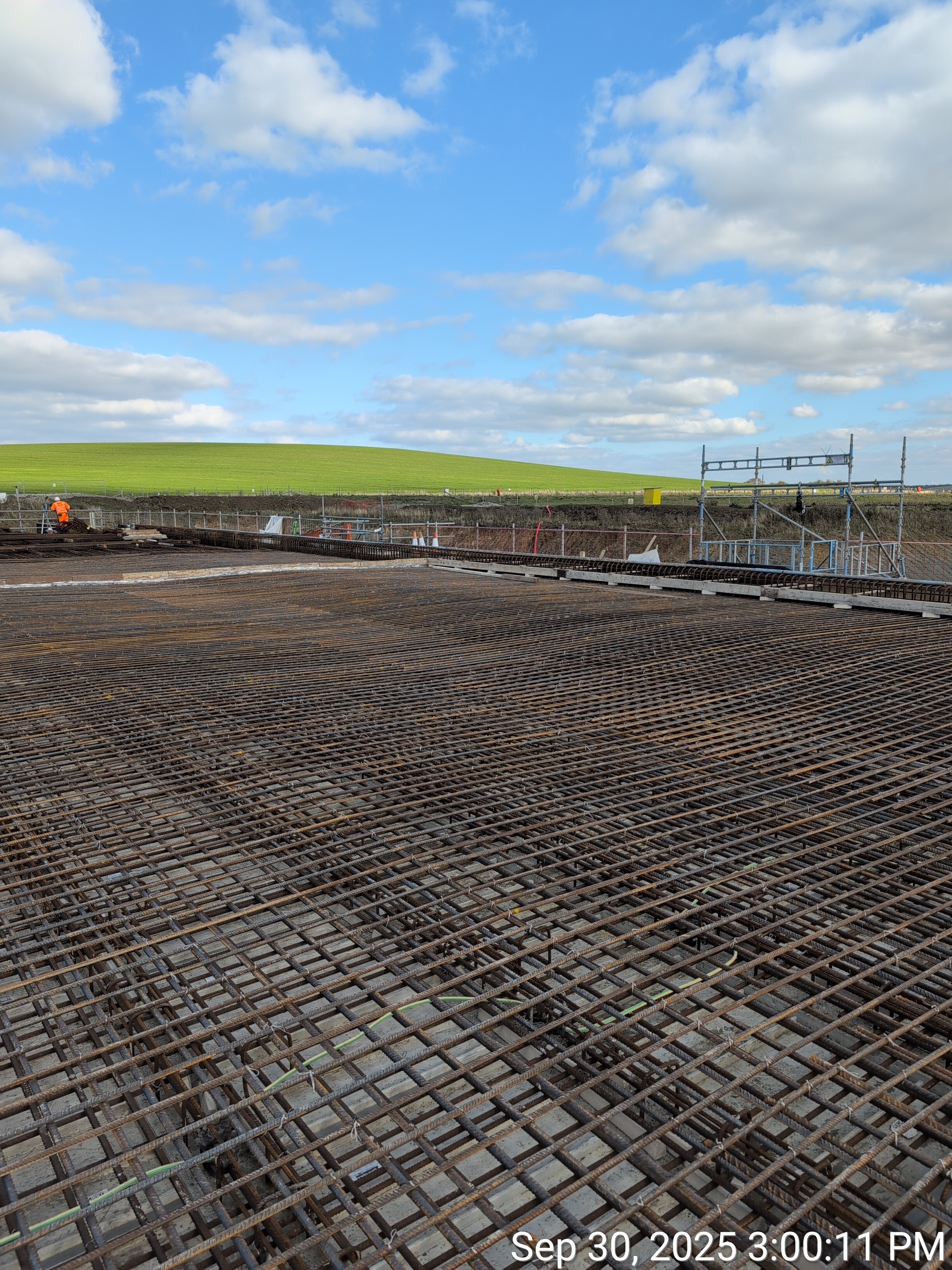
If you hand a fresh Civil Engineering graduate a standard optical theodolite, they will look at it with the same bewildered suspicion as if you had just handed them a Victorian butter churn.
Today’s Site Engineers are accustomed to absolute robotic luxury. They carry a carbon-fibre pole, press a button on a tablet, and a £30,000 yellow box 200 metres away violently spins around, locks onto their prism, and tells them their exact global coordinates to the millimetre.
The problem is, because the machine does all the thinking, we have raised a generation of engineers who treat a Total Station like a magical box of GPS witchcraft. But it isn't magic. It is just the culmination of a few hundred years of geometric suffering. If you do not understand the underlying physics of how we got from blokes in tweed jackets to the modern Robotic Total Station, you will inevitably let that yellow box trick you into building a £10 million bridge abutment 15 metres in the wrong direction.
Let us take a highly cynical, deeply educational stroll through the history of setting out.
Phase 1: Traversing and The Theodolite (The Era of Suffering)
Before we had lasers, we had angles, steel tapes, and misery.
If you wanted to build a railway in 1950, you used a theodolite. A theodolite is essentially an incredibly precise optical telescope mounted on a protractor. It cannot measure distance. It can only measure horizontal and vertical angles.
To know where you were, you had to perform a "Traverse." You started at a known coordinate (a trig pillar). You set up your theodolite, looked through the lens at a colleague holding a ranging rod at a new point, and measured the angle. Then, you physically pulled a heavy steel tape measure through the mud and across the sheep to measure the distance.
The Educational Reality: When you closed a traverse (looping back to a known point), it never perfectly matched. You always had an error. Why? Because steel tapes stretch when they are warm and sag when they are suspended. Because humans are flawed at reading optical vernier scales in the rain.
To fix this, engineers used the Bowditch Rule. You didn't just ignore the error; you mathematically distributed it across every single point in the traverse based on the length of each leg. A traverse taught you the most fundamental rule of engineering: errors compound. One sloppy angle measurement on a Tuesday meant your tunnel didn't meet in the middle on Friday.
Phase 2: The Dumpy Level (Harnessing Gravity)
While theodolites handled the X and Y coordinates (Eastings and Northings), they were notoriously fussy for heights. Enter the optical level (the "Dumpy" level).
Most young engineers think a Dumpy level is just a telescope on a tripod. It is actually a brilliant piece of mechanical physics.
The Educational Reality: Inside the body of a modern optical level is a Compensator. It is essentially a small prism suspended by incredibly fine, non-magnetic wires. When you roughly level the instrument using the three foot-screws and the circular bubble, the compensator takes over. Because it is freely suspended, gravity pulls it perfectly plumb.
Gravity is the only thing on a construction site that never lies, never asks for a pay rise, and never goes home at 4:00 PM on a Friday. The compensator bends the light passing through the lens so that your line of sight is flawlessly, mathematically horizontal, even if the tripod is slightly tilted. ( This is why if you tap the side of a Dumpy level, the crosshairs bounce. That is the pendulum swinging.)
Phase 3: The EDM (The Physics of Light)
The great leap forward came in the late 20th century with Electronic Distance Measurement (EDM). Engineers finally got sick of dragging steel tapes through freezing puddles, so they replaced the tape with a beam of infrared light.
The Educational Reality: Here is a secret: your Total Station does not use a stopwatch to measure how long the light takes to bounce back. Light moves too fast (300,000 km per second) for a site instrument to time it accurately to the millimetre.
Instead, it uses Phase Shift. The instrument modulates the infrared beam into a sine wave. It fires the wave at your glass prism, and the wave bounces back. The machine compares the returning wave to the wave it just sent out. Because the wave has traveled a specific distance, the returning wave will be slightly out of sync (phase-shifted) with the original. By calculating exactly how far out of sync the peaks and troughs of that wave are, the onboard computer can calculate the exact millimetre distance.
You aren't timing light; you are measuring its distortion.
Phase 4: The Total Station (Trigonometry in a Box)
What is a Total Station? It is simply the unholy marriage of Phase 1 and Phase 3.
Some brilliant engineer realised that if you bolt an EDM (to measure distance) onto an electronic theodolite (to measure vertical and horizontal angles), you suddenly have an instrument that knows exactly where that prism is in 3D space relative to the instrument.
The Educational Reality: When you do a "Resection" today, what is the machine actually doing?
You place the Total Station anywhere on site. You shoot a laser at Control Point A (a reflective target on a Sheet pile). The machine measures the angle and distance. You shoot Control Point B.
The onboard computer draws a mathematical circle around Point A, and a circle around Point B. The place where those two circles intersect is where your tripod is standing. It takes the microprocessor a fraction of a second to do the complex trigonometry that used to take three hours in a damp site cabin in 1975.
So I hear you ask "Why does any of this matter to a modern engineer?"
Because the Total Station does not know where it is in the world. It only knows the geometry you feed it. If your control points have been knocked by a telehandler, or if you have accidentally typed in a prism constant of -34mm instead of 0mm, the instrument will confidently, flawlessly, and precisely calculate the completely wrong coordinate.
Never trust the digital screen blindly. Understand the geometry. Respect the physics of the light and the gravity of the compensator. And remember that underneath the carbon fibre, the Bluetooth, and the touchscreen, you are still just a bloke in a muddy field trying to make a glorified protractor agree with the Earth.
Mosbah