The Brutal Reality of Design vs. Contracting
Every civil engineering graduate eventually faces the crossroad. You have your degree, you understand the fundamentals of structural mechanics, and now the industry demands a choice: Do you go to a Design Consultancy, or do you go to a Main Contractor?
Universities do a notoriously poor job of explaining the difference. They sell a romanticised vision where you sketch a suspension bridge on a napkin on Monday, and watch it get built on Friday.
The reality of modern infrastructure delivery - especially on megaprojects like HS2 or major highways - is a deeply fractured ecosystem. The designer and the contractor essentially speak two different languages, operate under two different types of stress, and view "success" through entirely different lenses.
Having spent years on the execution side, managing complex RC structures and heavy earthworks, I have spent a lot of time battling the symptoms of this divide. Here is the unvarnished, day-to-day reality of the Design vs. Contracting route.
The Design Route: The Pursuit of the Perfect Model
If you join a consultancy (the designers), your world is governed by theoretical perfection, Eurocodes, and risk mitigation.
The Day-to-Day Reality:
At 2:00 PM on a Tuesday, you are likely sitting in a climate-controlled office (or working from home), staring at a complex Finite Element Analysis (FEA) model or a dense Revit file. You are calculating the shear reinforcement required for a viaduct pier, ensuring it complies with every sub-clause of Eurocode 2.
The Core Challenge:
Your biggest enemy is liability. Designers are terrified of structural failure, so the natural instinct is to over-engineer. If a 200mm slab will theoretically hold the load, you specify 250mm just to be safe. If you need starter bars, you detail them at 100mm spacing.
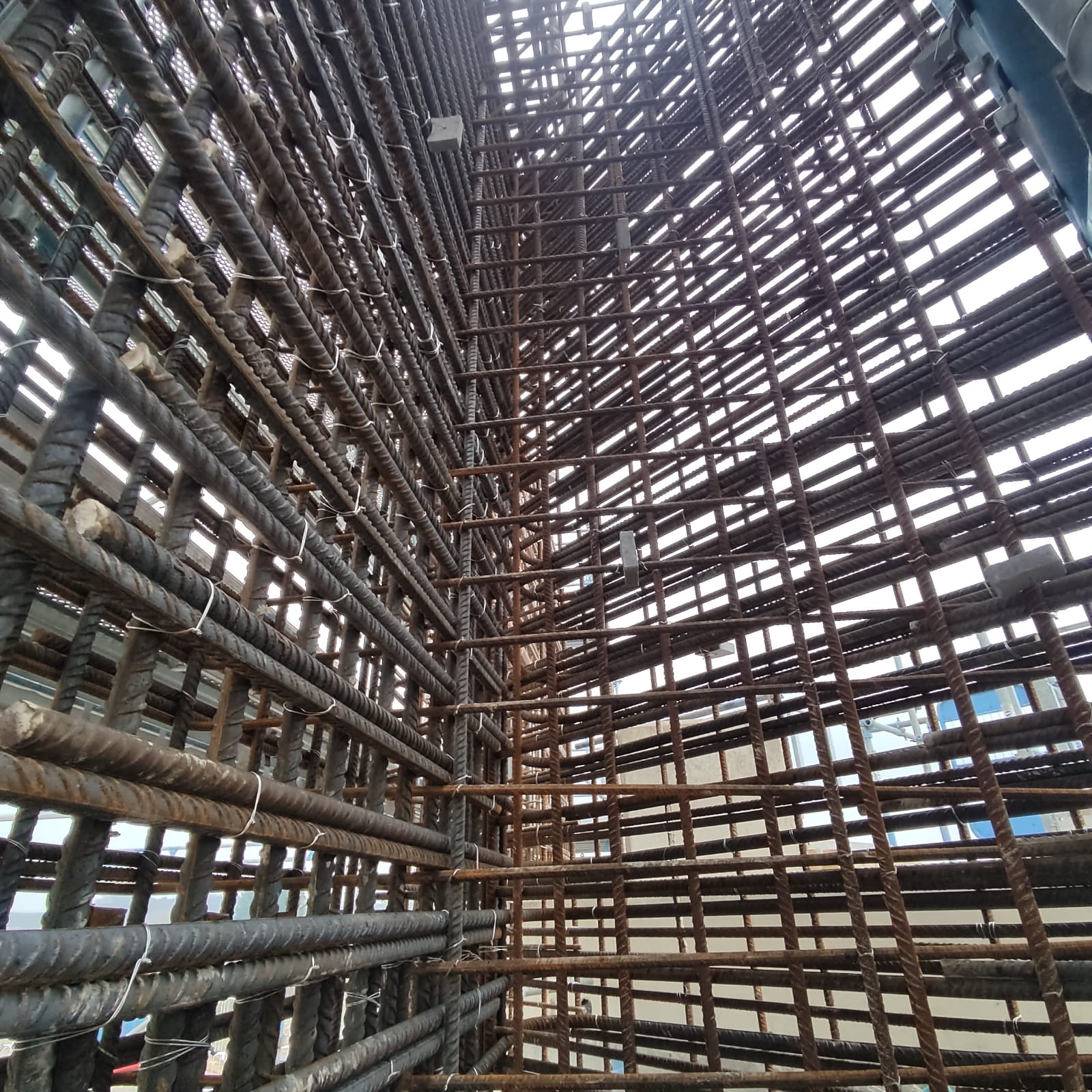
The problem is the "Constructability Vacuum." Many young design engineers have never stood in a muddy trench in the pouring rain trying to physically tie the rebar they just drew on a screen. They do not realise that detailing three layers of B32 reinforcement with 75mm spacing leaves no physical room for the aggregate in the concrete to pass through, practically guaranteeing honeycombing and structural voids.
The Verdict: The design route builds deep, analytical technical expertise. But it often breeds a dangerous detachment from physical reality. You are building digital twins, but you rarely get to see the physical child.
The Contracting Route: The Chaos of Execution
If you join a main contractor (the builders), your world is governed by logistics, temporary works, commercial pressure, and the unrelenting forces of nature.
The Day-to-Day Reality:
At 2:00 PM on a Tuesday, you are standing next to an open excavation. The 3D machine control on your excavator is perfectly calibrated, but the ground conditions don't match the geotechnical report. The temporary formwork for an abutment is clashing with an unmapped utility line. You have six concrete wagons scheduled for 3:00 PM, a gang of steel fixers waiting for instructions, and a commercial manager breathing down your neck about the critical path.
The Core Challenge:
Your biggest enemy is time. You are not designing the permanent works; you are engineering the method of building them. You are dealing with crane lifting plans, deep excavation shoring, and managing human error.
Contractors live in the "As-Built" reality. When you receive that over-engineered, unbuildable rebar drawing from the designer, you are the one who has to halt production, raise the formal Request for Information (RFI), and engineer a practical, safe workaround on the fly.
The Verdict: The contracting route builds elite problem-solvers, leaders, and commercially astute engineers. You learn how infrastructure actually goes together. However, the technical math is often replaced by logistics, and the burnout rate from the hours, the weather, and the stress is significantly higher.
The Great Divide: Where Projects Bleed Money
The tragedy of the UK construction sector is how aggressively these two sides are siloed.
Designers build a perfect 3D model in a vacuum. They throw it over the fence to the Contractor. The Contractor looks at it, realises half of it is unbuildable in the physical environment, and spends the next 18 months submitting Early Warning Notices (EWNs), RFIs, and Design Modification Requests (DMRs) to fix it.
This friction is where the £60 billion HS2 budgets go to die. We are paying for the time it takes for the Mud and the Model to reconcile.
Bridging the Gap
If we are going to fix how we deliver major infrastructure, we need to stop treating these two career paths as mutually exclusive.
We need designers who are mandated to spend their first two years on a muddy site, learning why 150mm rebar spacing is a nightmare to pour concrete through. Conversely, we need site engineers who understand the structural load paths well enough to know why the designer detailed it that way, rather than just complaining about it on a WhatsApp group.
Ultimately, the most valuable engineers in the modern market are the hybrids. They are the ones who can operate a Leica Total Station, manage a £1M concrete pour, and then sit down at a laptop to confidently interrogate a 3D BIM model and enforce the digital compliance required by an NEC4 contract.
Whether you choose the screen or the mud, remember: the goal isn't just to design a bridge, or even to build one. The goal is to get it Right First Time.
And you cannot do that if you only understand half the equation.
Mosbah