The Great Crested Newt: How a 6-inch Amphibian Defeats £30 Million of Heavy Plant
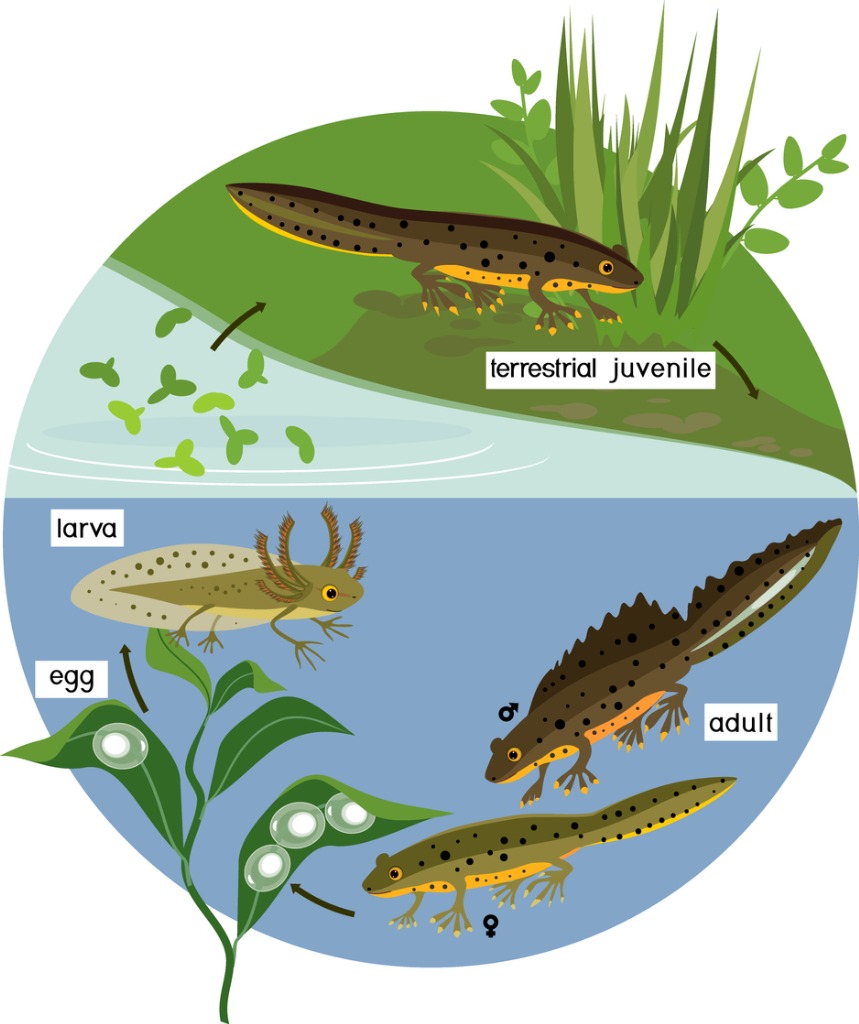
When you stand on a major earthworks project at the height of summer, the sheer scale of the operation is intoxicating. You are watching a perfectly choreographed ballet of mechanical violence.
A fleet of 40-tonne Volvo Articulated Dump Trucks (ADTs) is roaring across the haul roads. GPS-guided D6 bulldozers are slicing the earth to the millimetre. The ground vibrates under your boots. It is a £30 million symphony of diesel, hydraulic fluid, and raw, unforgiving civil engineering. You feel like you are conquering the very planet.
And then, a 23-year-old graduate named Matthew, wearing a pair of clean Hunter wellies and holding a plastic bucket, raises his hand.
The ADTs slam on their brakes. The bulldozers drop their revs. The entire multi-million-pound operation grinds to a horrifying, screeching halt.
Matthew has found a Great Crested Newt.
Welcome to the brutal, high-stakes reality of environmental engineering in the UK. You spend four years at university learning how to fight gravity, hydrostatic pressure, and soil shear failure. But on site, your greatest and most invincible enemy is a six-inch amphibian with a slightly bumpy back.
The Legal Warhead: Triturus cristatus
To understand why a lizard possesses the power to paralyse a mega-project, you must understand the law.
The Great Crested Newt (GCN) is a European Protected Species, covered by the Wildlife and Countryside Act 1981. This is not a polite environmental guideline. It is a legislative warhead. If Nige the excavator driver accidentally squashes a GCN with his tracks, or if you knowingly destroy a resting place without a Natural England licence, it is a criminal offence. You face an unlimited fine and up to six months in prison.
When Matthew points at the mud and says "Newt," the Project Manager’s face drains of all colour. He is no longer calculating cubic metres of cut-and-fill; he is suddenly calculating his chances of surviving cell block C.
Engineering the Mitigation: The Amphibian VIP Line
We cannot just ask the newts to leave. We have to physically re-engineer the landscape to remove them, which requires military-level logistics.
This brings us to the art of Amphibian Exclusion Fencing (AEF).
You might think building a fence for a lizard is simple. It is not. The AEF is a highly specified temporary works structure. You cannot just unroll some plastic. The engineering specification demands:
The Trenching: The heavy-duty Visqueen membrane must be buried exactly 200mm into the ground.
The Lip: There must be a 100mm horizontal "return" (a lip) at the bottom of the trench, facing the newts, to prevent them from digging underneath it like tiny, scaly bank robbers.
The Traps: Every 5 to 10 metres along this miles-long fence, we must install "pitfall traps."
A pitfall trap is literally a plastic bucket sunk flush into the earth. The newt walks along the fence, gets annoyed that it can't cross, and falls into the bucket. Matthew then comes along in the morning, collects the newt, and carries it to a newly built, £100,000 "mitigation pond" safely off-site.
We are using heavy civil engineering to construct a VIP nightclub queue for amphibians.
The Critical Path Nightmare
But the physical fencing isn't what destroys the project. It is the schedule.
Under the Natural England licence, you must achieve a specific number of "clear trapping days" (usually 30 to 60 days, depending on the population size) before you are legally allowed to bring the bulldozers in.
This dictates the Critical Path of your entire programme. And here is the terrifying catch: Newts are lazy.
If the overnight temperature drops below 5°C, the newts go dormant. They stop moving. If they don't move, they don't fall into the buckets. And if the temperature drops below 5°C, that day does not count towards your trapping total.
Imagine being the Lead Planner on a £100 million highway. The earthworks season (the dry summer months when you can actually move clay) is rapidly closing. You need to start stripping topsoil by September, or the ground turns to soup and you lose the entire year.
You spend every morning staring at a thermometer, praying for 6°C, watching your profit margin evaporate because the local amphibian population decided to have a lie-in. It is psychological torture.
Silt Warfare and pH Balancing
Even when you clear the area, the war isn't over. You must protect their remaining habitats.
If you expose four acres of raw clay on a site and it rains, the runoff turns into highly suspended silt water. If that silt water makes it into a nearby GCN breeding pond, it coats the aquatic plants they lay their eggs on and fatally alters the pH of the water.
So, as a Site Engineer, you are suddenly tasked with designing a complex hydrological defence system. You are excavating massive attenuation swales, lining them with geotextiles, and building miles of silt fencing (porous membrane trenched into the ground to filter the water). You are dosing settlement lagoons with flocculants (chemicals that bind to the silt particles and force them to drop to the bottom) just to ensure the water leaving your site is cleaner than Evian.
The Ultimate Standoff
The irony of modern infrastructure is profound. We wield machines capable of moving mountains. We use satellites to guide our steel blades to the millimetre. We employ the brightest mathematical minds in the country.
But at 7:00 AM on a Monday, the foreman - a man who has spent 30 years carving motorways out of solid rock - must stand in the freezing rain with the engine of his 40-tonne machine turned off. He must cross his arms, grit his teeth, and wait while a 23-year-old with a bucket gently inspects a puddle.
The Earth may belong to the engineer. But the schedule belongs to the Newt.
Mosbah